
If you’ve ever scrolled through reviews on Shopee and saw a tiny label that says “Similar Product Review,” you’re not alone.
Most people see it all the time but have no idea what it actually means, and yes, it does matter.
Here’s the simple breakdown, without the technical jargon.
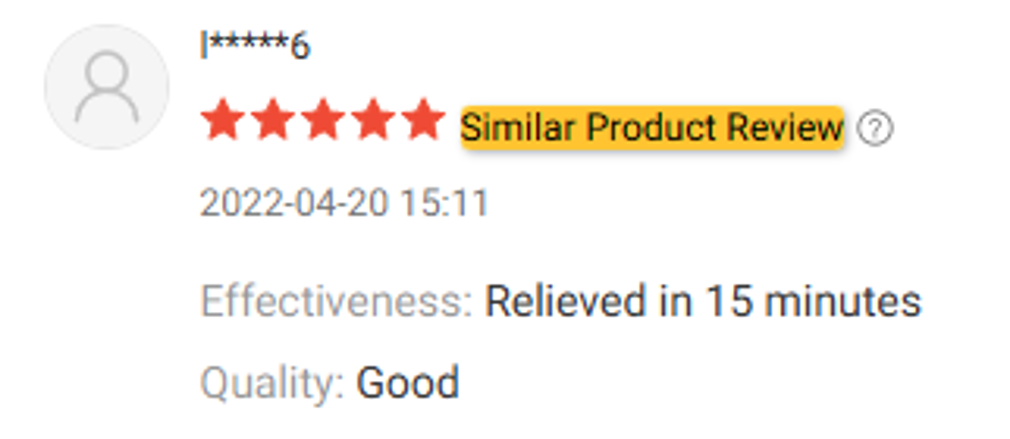
So… what is “Similar Product Review”?
It means the review you’re reading is NOT for the exact product listing you’re looking at.
Shopee basically says:
“This product looks similar to another product, so we’ll just share that product’s reviews here too.”
It could be the same brand, same model, the same photo, or it simply looks similar enough for Shopee’s system to group them together.
In other words, the review isn’t originally for that exact listing. It’s taken from another similar listing from another seller.
Why Shopee does this
There are a few reasons:
1. To make new listings look less empty
New sellers usually start with zero reviews. Sharing reviews gives them a boost.
2. More reviews = faster decisions
Seeing 200 reviews feels safer than seeing 2.
Basically, Shopee wants to speed things up.
How it impacts you (the important part)
The good side:
1. You get more info.
If people complain that a certain blender always leaks, you’ll know, even if the review came from another seller.
The downside (and it’s real):
This is where things start to fall apart.
This feature isn’t always accurate. In fact, it often mislabels fake, refurbished, or low-quality items as “similar” to legitimate ones.
When that happens, reviews from genuine sellers get mixed into counterfeit listings.
1. You might trust the wrong seller
A listing with zero real reviews might suddenly look amazing because Shopee borrowed reviews from another store.
2. “Similar” doesn’t mean identical
Shopee sometimes groups items that are:
- different quality
- different versions
- original vs fake
- new vs refurbished
- or simply photographed from similar angles
This can mislead buyers in a big way.
3. Fake listings can look legitimate
A counterfeit item could show “5 stars, 1,000 reviews”, but those reviews might actually belong to a genuine listing.
Example
Here’s a real example involving Panadol Actifast.
A seller lists Panadol Actifast 10 tablets at a very cheap price.
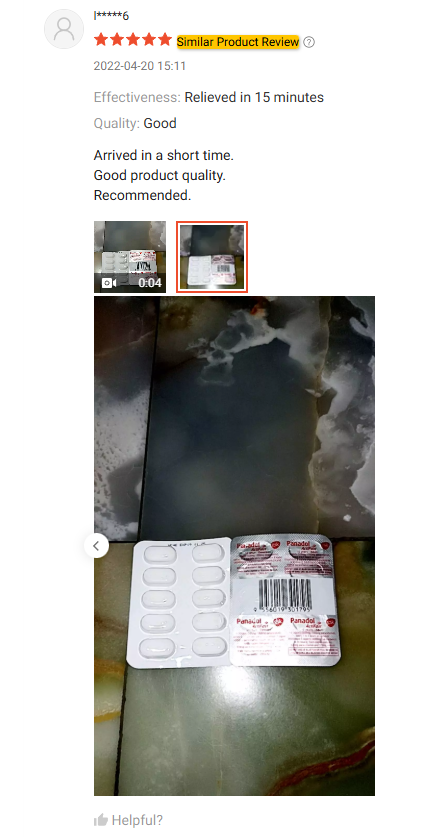
First review:
- Has the “Similar Product Review” tag.
- The image shows a genuine Panadol blister pack.
Second review:
- Has no “Similar Product Review” tag, meaning this is a real review specifically for this listing.
- The blister pack looks completely different, and the company logo (GSK) is missing on the right side.
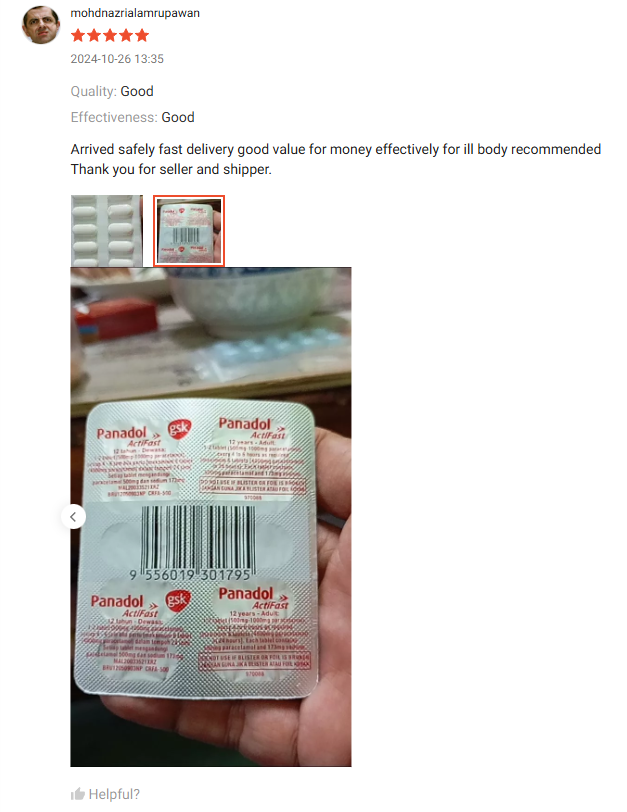
This shows how misleading the feature can be. A counterfeit product ends up looking legit because real reviews from another listing are placed next to it, and vice versa.
How to avoid getting tricked
Here’s what you can do to be safer:
1. Check the tag
If it says “Similar Product Review,” treat it as general info, not seller-specific.
2. Look for REAL reviews with photos
Photo reviews without the “Similar Product Review” tag = way more reliable.
3. Don’t trust listings that look “too good”
Cheap price + tons of reviews + new seller = Red flag
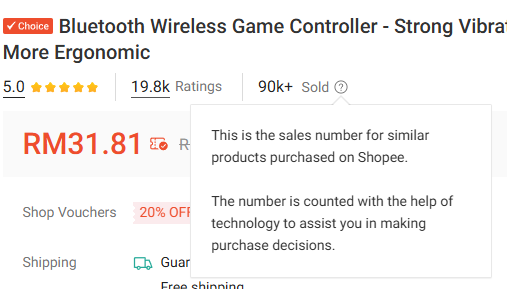
4. Check the product sold number (for PC user only)
If you’re browsing Shopee on a PC and you see a question mark icon next to the “sold” count, hover your mouse over it. If the message below appears:
This is the sales number for similar products purchased on Shopee. The number is counted with the help of technology to assist you in making purchase decisions.
Then it means this product includes “Similar Product Review” in its reviews.
Final Thoughts
Shopee’s “Similar Product Review” started as a helpful idea, but somewhere along the way, it became a feature that confuses and misleads users more than it helps them.
Instead of giving clear and honest feedback, it mixes reviews from different sellers, different product versions, and sometimes completely different quality levels.
The result?
Confusion, misplaced trust, and a shopping experience that feels far less transparent than it should be.
If you can’t tell whether a review is for the exact product you’re about to buy, the entire point of customer reviews starts to collapse and that’s how this feature ends up ruining the user experience instead of improving it.